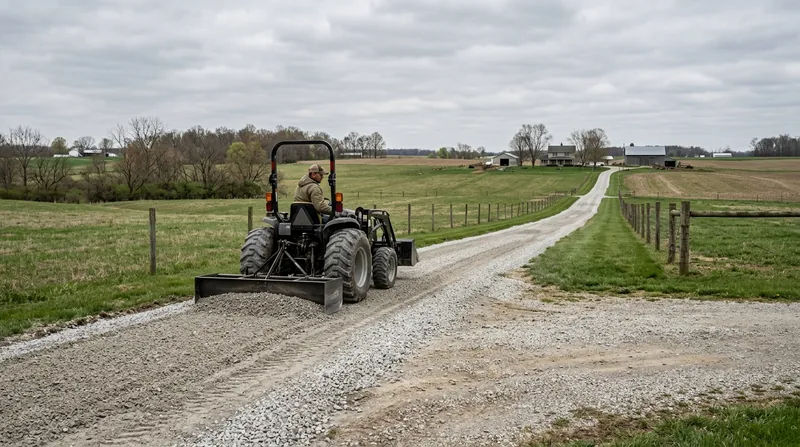




Gravel driveways on Cincinnati's ridge lots and rural acreage in Clermont and Warren counties face a seasonal challenge: spring rain cuts ruts, and standing water breaks down the stone base. Gravel driveway installation and grading in Cincinnati means reshaping the crown, adding fresh compacted stone, and ensuring water sheds off the drive instead of pooling. On the ridges and in the suburbs around Mason, West Chester, and Anderson Township, where post-war subdivisions sit on wider, flatter lots, a well-graded gravel drive can hold for two to three years before regrading is needed. We reshape the surface, compact it properly, and get the drainage right so your drive stays usable through Ohio winters and springs. This is not just dumping stone; it is base preparation work that keeps water off your foundation and off your neighbors' property.
Why Gravel Driveway Installation and Grading Matters in Cincinnati's Ridge and Rural Areas
Cincinnati's terrain splits sharply between the basin neighborhoods and the ridges. Down in Mount Adams and Clifton, driveways are narrow and shared, built a century ago. Out on the ridges and in the rural towns of Clermont County, Anderson Township, and around Mason and Lebanon, the lots are wider and the drives are gravel or recycled asphalt millings. Spring runoff and the freeze-thaw cycle break down gravel quickly. A crown that sheds water prevents pooling, foundation saturation, and washouts. Proper grading also protects your neighbors' property and keeps your driveway passable when the snow melts.
- Gravel driveways need regrading every two to three years as spring rains cut ruts and settle the stone base.
- A proper crown sheds water away from your home and your neighbors' property, preventing saturation and erosion.
- Fresh compacted stone extends the life of your drive and improves traction in winter and wet weather.
- Correct slope and drainage prevent washouts and keep the driveway passable year-round.
Grading and compaction are the foundation of a durable gravel drive, and they are often overlooked until the ruts become impassable.
Key info: Cincinnati's ridge neighborhoods and rural Clermont County lots drain poorly in spring. A gravel drive without a proper crown will develop ruts within weeks of thaw, and water pooling near the apron can saturate the soil beneath your foundation. Regrading and fresh stone are preventive maintenance, not repairs.
For more on how proper drainage protects your driveway, see our guide to driveway extensions, widening, and aprons, which addresses how water flows off your property.
How We Grade and Install Gravel Driveways in Cincinnati
Gravel driveway installation and grading starts with a site visit. We measure the drive, assess drainage, check for low spots, and determine how much fresh stone you need. We then remove failed or compacted stone, reshape the base to create a proper crown, add fresh stone (typically 2 to 4 inches of crushed limestone or recycled asphalt millings), and compact it with a plate compactor. The crown sheds water to both sides. We verify slope and drainage before we leave the site.
- We measure your drive and assess the existing base, drainage, and compaction.
- We remove failed stone and debris, and scarify the base to accept new material.
- We add fresh crushed stone or recycled asphalt millings in the correct depth and grade.
- We shape the crown using a grader or by hand to ensure water sheds to both edges.
- We compact the stone with a plate compactor to bind it and prevent rutting.
- We verify slope and drainage so water does not pool near your apron or your neighbor's property.
The result is a drive that will hold for two to three years before regrading is needed again.
Example: A homeowner in Anderson Township, Clermont County, had a 200-foot gravel drive that was rutted and holding water after spring thaw. We removed the failed stone, reshaped the base with a slight crown, added four inches of recycled asphalt millings, and compacted the drive. The cost was within our typical range for that size, and the drive shed water properly. Two years later, the homeowner called for regrading, which is the normal cycle for gravel in this climate.
If you are considering upgrading from gravel to asphalt, see our page on asphalt driveway paving and installation to compare durability and cost.
Gravel Driveway Installation Methods: Crushed Stone, Recycled Asphalt Millings, and Regrading
| Approach | Description | Best for |
|---|---|---|
| Fresh crushed limestone | New quarried stone, 2 to 4 inches deep, compacted for stability and drainage. | Driveways with poor base or high water table; longer-lasting than recycled asphalt. |
| Recycled asphalt millings | Reclaimed asphalt chunks and dust, compacted to bind and shed water. See our recycled asphalt millings page for more detail. | Budget-conscious homeowners; binds over time and creates a semi-solid surface. |
| Regrading existing gravel | Reshape and recompact existing stone without adding new material, if base is sound. | Drives with minor rutting and good drainage; lowest cost option. |
| Mixed approach: regrading plus fresh stone | Reshape the base, add 2 to 3 inches of fresh stone to the top, then compact. | Most common; extends driveway life and improves drainage without full replacement. |
Gravel Driveway Installation and Grading Cost in Cincinnati: What to Expect
Gravel driveway installation and grading in Cincinnati starts at around $950 for a typical residential driveway (200 to 250 feet long, 12 to 14 feet wide). The cost depends on the length and width of your drive, how much failed stone needs to be removed, whether you need fresh crushed limestone or recycled asphalt millings, and site access. A simple regrading of existing stone costs less than adding new material. A longer rural drive or one with poor drainage may cost more. We provide a written estimate with tonnage specifications so you know exactly what you are getting.
The best way to understand the cost for your property is to get two or three estimates from contractors who will measure your drive on site and specify the stone grade and depth. See our pricing page for more detail on factors that affect the final cost.
Gravel Driveway Installation and Grading Near Me: What Cincinnati Homeowners Should Know When Hiring a Contractor
Hiring a gravel driveway contractor in Cincinnati means checking that the company is insured, getting a written estimate with measurements and tonnage, and understanding what permitting may be required in your municipality. Some villages require permits for driveway work or for changes to drainage. If your property is in an HOA (common in subdivisions around West Chester, Mason, and Sharonville), check the architectural guidelines before you hire, because some HOAs restrict driveway material or require pre-approval. Ask for references and check whether the contractor has experience with Cincinnati's specific drainage challenges.
- Verify that the contractor is fully insured and can provide a certificate of insurance.
- Get a written estimate that includes measurements, stone type, depth, and tonnage.
- Ask whether permits are required in your city or village and who handles the permit application.
- If you are in an HOA, check the architectural guidelines and confirm approval before work begins.
- Ask for references from other Cincinnati homeowners and verify past work.
- Understand the warranty: honest contractors offer a workmanship warranty of one to three years, not a lifetime guarantee.
Do not hire a contractor who shows up unsolicited, demands a large cash deposit, or refuses to provide a written contract. Contact us for a free estimate at (513) 813-2379, and we will measure your drive, explain your options, and give you a clear price in writing.


