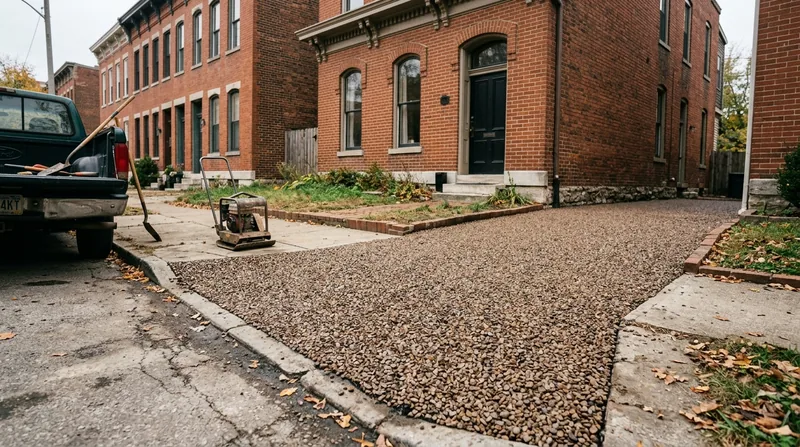




Tar and chip driveways in Cincinnati suit the city's older basin neighborhoods where narrow, shared drives and steep hillside cuts demand a textured surface that holds through wet Ohio winters. Unlike smooth asphalt, tar and chip gives grip without the gloss, and it costs less than a full pave while outlasting gravel by years. We spray the binder, spread crushed stone, and roll it so the chip coat bonds through freeze-thaw cycles and spring saturation. If your driveway in Mount Adams, Price Hill, or Clifton has settled into a washboard or is shedding loose stone, tar and chip can restore it without the heavy equipment and base work that a full asphalt replacement demands. Read on to learn how this method works, what it costs, and when it makes sense for your property.
Why Tar and Chip Driveways Matter in Cincinnati's Older Neighborhoods
Cincinnati's basin and hillside streets were built for foot traffic and narrow carriages, not two-car households and SUVs. Shared drives in Victorian neighborhoods like Clifton and East Walnut Hills often lack the width or the stable base for conventional asphalt. Tar and chip fills that gap. It gives a rustic, permeable surface that sheds water into the ground instead of pooling at the apron, and it suits the character of older homes without looking industrial. On steep slopes where ground saturation is chronic, tar and chip's flexibility handles minor settlement better than rigid asphalt, and its cost per square foot sits well below a full pave.
- Tar and chip costs 30 to 40 percent less than new asphalt, making it a smart budget option for long, shared, or steep drives.
- The textured surface provides natural grip in wet conditions without the glossy slip of smooth blacktop.
- It suits narrow basin drives and hillside cuts where conventional paving equipment cannot easily maneuver.
- The permeable surface allows water to drain into the base instead of running off, reducing pooling and edge washouts.
- Tar and chip can be installed over an existing gravel or deteriorated asphalt base with minimal excavation or base removal.
These qualities make tar and chip the practical choice for Cincinnati homeowners who want durability without the cost or logistics of a full asphalt installation.
Key info: Cincinnati's Municipal Code requires a permit for driveway work if your apron connects to a city right-of-way, and some HOA communities restrict material choice to asphalt or concrete. Verify your local building department rules and any HOA architectural standards before you schedule an estimate. Call (513) 813-2379 to discuss your property's constraints.
How We Build a Tar and Chip Driveway in Cincinnati
Tar and chip installation is faster and less disruptive than asphalt paving because it requires no heavy milling or removal. We start with a site walk to assess the existing surface, drainage, and any soft spots or ruts. If the base is sound, we clean the surface, fill major voids, and proof-roll the grade to confirm it will not shift under traffic. We then spray a tack coat of liquid asphalt binder, spread the crushed stone to specification, and roll the surface so the stone embeds firmly into the binder and locks together. The result is a stable, textured drive ready for light traffic within 48 hours.
- We inspect the existing surface and base to identify soft spots, drainage issues, or areas that need grading.
- We clean the drive, fill holes or ruts with crushed stone, and proof-roll the base to confirm stability.
- We spray a uniform coat of liquid asphalt binder across the prepared surface.
- We spread the specified tonnage of crushed stone evenly over the wet binder.
- We roll the entire surface with a vibratory compactor to lock the stone into the binder and create a solid riding surface.
- We allow 48 hours for the binder to cure before opening the drive to normal traffic.
The whole process takes one to two days depending on the drive length and width, and it requires no major traffic disruption or lengthy curing time.
Local example: A 20-by-40-foot shared drive in Mount Adams with a failing gravel base took four hours from binder spray to final roll. The homeowner was able to use the drive the next morning. The textured surface now sheds water into the yard instead of pooling at the foot of the slope, and it has held through two wet springs without washout.
Tar and Chip Methods and When to Use Each
| Approach | Description | Best for |
|---|---|---|
| Tar and Chip over Existing Asphalt | Spray binder onto sound asphalt and spread stone without removing the old surface. | Driveways with minor cracking or surface wear but a solid base underneath. |
| Tar and Chip over Gravel | Grade and compact existing gravel, then apply binder and stone to lock the base together. | Rural or shared drives transitioning from loose stone to a bound surface without full replacement. |
| Tar and Chip with Base Prep | Remove failed asphalt or soft gravel, grade the subgrade, add stone base, and apply tar and chip. | Drives with poor drainage, soft clay, or extensive base failure requiring full reconstruction. |
| Tar and Chip Maintenance Overlay | Apply a fresh coat of binder and stone over an existing tar and chip drive to restore grip and appearance. | Drives 5 to 8 years old showing loose stone or surface raveling but no structural failure. |
Each approach is tailored to the condition of your existing surface and the strength of the base underneath. We assess your drive during the free estimate and recommend the method that delivers the most value.
Tar and Chip Driveways Cost in Cincinnati: What to Expect
Tar and chip pricing in the Cincinnati area starts at around $5 per square foot for a straightforward installation over an existing sound asphalt or gravel base. A typical 20-by-40-foot residential drive runs 800 square feet and costs between $4,000 and $5,500 depending on stone type, binder quality, and site access. Longer drives, steep slopes, or extensive base preparation push the cost higher. Shared drives in basin neighborhoods, where access is tight and grading is minimal, often fall at the lower end of that range. Hillside cuts in East Walnut Hills or Madeira that require grading, drainage work, or proof-rolling of saturated soil will be closer to the upper range or require an on-site estimate.
Factors that affect your final cost include the size of the drive, the condition of the existing base, the tonnage of stone required, and whether grading or drainage work is needed. A drive with a solid base and good drainage costs less than one where soft clay or slope failure demands base reconstruction. We always provide a written estimate with tonnage and material specs so you know exactly what you are paying for. Visit our pricing page for a full breakdown of service costs and variables, and call (513) 813-2379 for a free, no-obligation estimate within 24 hours.
Tar and Chip Driveways Near Me: What Cincinnati Homeowners Should Know When Hiring a Contractor
Choosing the right contractor for your tar and chip drive is as important as choosing the material. Start by asking any contractor for proof of liability and property damage insurance, and request a written estimate that includes the square footage, tonnage of stone, binder type, and the steps they will take to prepare your base. Be wary of door-to-door offers, unsolicited quotes with no site visit, or prices that seem too low to be real. A legitimate contractor will always visit your property, measure the drive, assess the base, and explain why they are recommending a specific approach. If you live in an HOA community, check your architectural guidelines before you schedule work, because many master-planned communities restrict driveways to asphalt or concrete only. Verify Cincinnati's or your village's permit requirements with the local building department, and confirm that any contractor you hire understands those rules. References from past work in your neighborhood are gold, because a contractor who knows Cincinnati's terrain, soil, and permit landscape can navigate the job with confidence.
- Always request a written estimate with square footage, tonnage, material specs, and a timeline before you commit.
- Check that the contractor carries liability insurance and ask for a certificate of coverage.
- Ask for references from drives they have installed in Cincinnati, Norwood, Cheviot, or your specific neighborhood.
- Verify permit requirements with your city or village building department and confirm the contractor will handle any necessary paperwork.
- If you live in an HOA, review architectural standards and get HOA approval in writing before work begins.
- Get at least two or three estimates so you can compare approach, pricing, and professionalism.
We are fully insured and have been in business since 2016 serving Cincinnati and the surrounding communities. Contact us for a free estimate, and we will walk you through the process, explain your options, and answer any questions about permits or HOA requirements in your area.
Tar & Chip Driveways in Cincinnati: Pricing Guide
| Service | Price | Details |
|---|---|---|
| Tar and Chip over Sound Asphalt or Gravel | Starting at $5/sq ft | Binder, stone, and compaction on existing stable base. Cost rises with drive size and slope steepness. |
| Tar and Chip with Grading and Base Prep | Starting at $6/sq ft | Includes grading, soft-spot removal, drainage work, and proof-rolling before binder and stone application. |
| Tar and Chip Maintenance Overlay | Starting at $3.50/sq ft | Fresh binder and stone coat over existing tar and chip surface showing wear. Extends life 5 to 8 years. |
| Complex or Large-Scale Drives | On estimate | Hillside cuts, poor drainage, failed base, or drives over 5,000 square feet require site assessment. |
| Travel and Estimate | Free | No charge for site visit or written estimate. Response within 24 hours in Cincinnati and surrounding areas. |
Indicative pricing, the exact cost depends on square footage, finish, and site access. Free personalized estimate within 24h at (513) 813-2379.


