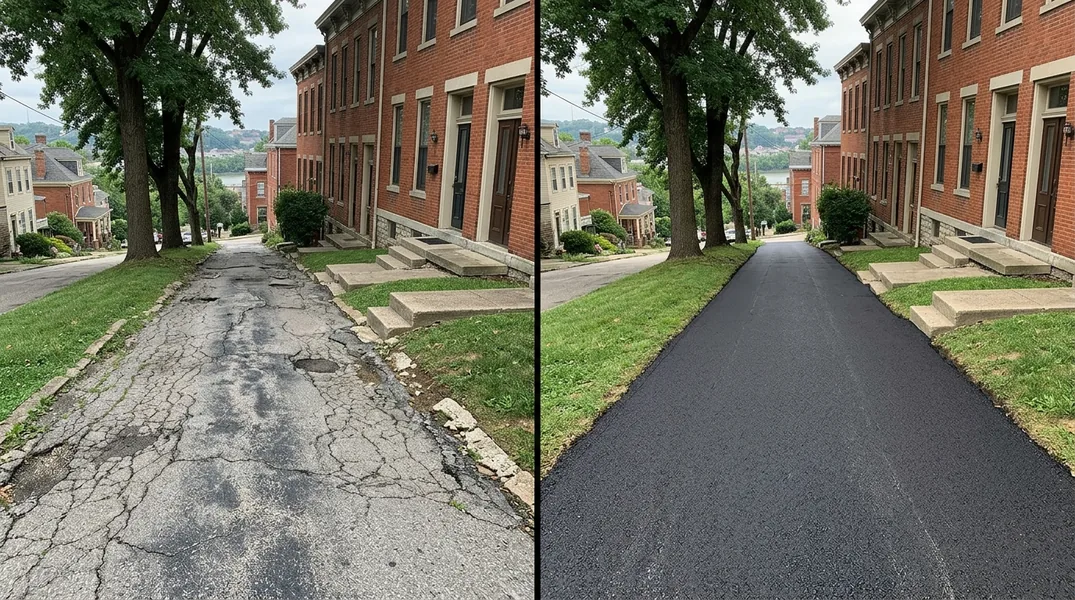
Understanding Cincinnati's Unique Ground Challenges
Cincinnati sits in a region known for its rolling hills, variable soil composition, and challenging weather patterns. The city's topography means many residential driveways sit on slopes or uneven terrain, which creates specific demands on any paving material you choose. Beyond the hills, Cincinnati experiences freeze-thaw cycles that can be particularly hard on driveways. Winter temperatures drop below freezing, moisture seeps into cracks, and then the ice expands, widening those cracks further. Spring brings thawing, which loosens the base layer. This cycle repeats year after year, and the material you select must withstand this punishment.
Homeowners in the area often wonder which material performs better under these conditions: asphalt or concrete. Both have merits, but they respond differently to hillside installation, ground movement, and seasonal stress. Understanding how each material handles Cincinnati's specific environment will help you make an informed decision that protects your investment for years to come.
Asphalt vs. Concrete Driveway: Key Differences for Hillside Properties
When comparing asphalt vs. concrete driveway options, the most fundamental difference lies in how each material responds to movement and stress. Asphalt is a flexible, semi-rigid material composed of bitumen and aggregate. Concrete is a rigid, brittle material that cracks rather than flexes. On a hillside, this distinction matters enormously. Asphalt can shift slightly with ground movement and seasonal expansion without catastrophic failure. Concrete, by contrast, tends to crack when the ground beneath it settles unevenly or when frost heave pushes from below.
Asphalt Driveway Paving & Installation is often the preferred choice for sloped properties because it accommodates minor ground shifts more gracefully. Concrete driveways on hillsides frequently develop linear cracks that follow the slope contours, especially in freeze-thaw climates. Once concrete cracks, water penetrates, freezes, and the problem accelerates. Asphalt, while not immune to cracking, distributes stress more evenly across its surface and can be more cost-effectively repaired through Pothole Repair & Asphalt Patching or Asphalt Resurfacing & Overlay techniques.
Asphalt Over Concrete Driveway: A Middle-Ground Solution
Some homeowners face a unique scenario: they already have a concrete driveway that is deteriorating or showing signs of age. Replacing it entirely is expensive, but the current surface is no longer safe or attractive. This is where the concept of asphalt over concrete driveway installation comes into play. Paving asphalt directly over an existing concrete base can be a practical and economical solution, provided the concrete is structurally sound and properly prepared.
The process involves cleaning the concrete surface thoroughly, filling any large cracks, and applying a tack coat to help the asphalt adhere. When done correctly by experienced professionals, asphalt over concrete can extend the life of your driveway and improve its appearance and traction. However, this approach works best when the underlying concrete is not severely damaged or settling. If your concrete is cracked extensively or the base has failed, placing asphalt over it may only delay the inevitable need for full replacement. For properties on Cincinnati's hillsides where ground movement is a concern, a new asphalt installation on a properly engineered base is often the more durable long-term choice than overlaying an aging concrete slab.
Asphalt Driveway Lifespan: What to Expect in Cincinnati's Climate
Understanding asphalt driveway lifespan is crucial when making your investment decision. Under ideal conditions with proper maintenance, a well-installed asphalt driveway typically lasts 15 to 20 years. In Cincinnati's climate, where freeze-thaw cycles are common and UV exposure degrades the binder over time, you might see the upper end of this range if you perform regular maintenance. Concrete driveways, by comparison, can last 25 to 30 years or longer, but when they fail, they often fail suddenly and catastrophically. A cracked concrete driveway cannot be easily patched; you typically must replace large sections or the entire slab.
Asphalt's advantage lies in its maintainability. Seal coating every two to three years protects the surface from water infiltration and UV damage, significantly extending the asphalt driveway lifespan. Small cracks and potholes can be repaired affordably before they become major problems. This progressive maintenance approach means you can keep an asphalt driveway in good condition for 20+ years with modest annual investment. Concrete requires less frequent maintenance but offers fewer repair options when damage occurs. For budget-conscious homeowners on hillsides, asphalt's flexibility and repairability often provide better value over the driveway's lifetime.
Blacktop Driveway Performance on Slopes: The Practical Reality
A blacktop driveway (another term for asphalt) performs exceptionally well on sloped terrain because of its inherent flexibility and the way it can be installed with proper drainage considerations. On a hillside, water management is critical. Asphalt can be graded to shed water effectively, and its slightly textured surface provides good traction even on moderate slopes during wet or icy conditions. Concrete, while initially offering good traction, becomes slippery when wet and especially dangerous when ice forms. Many Cincinnati homeowners on hills have experienced concrete driveways that become treacherous in winter.
The installation of a blacktop driveway on a slope requires attention to base preparation and compaction. A poorly prepared base will fail faster on a hill than on flat ground, so hiring experienced contractors is essential. The good news is that asphalt contractors have well-established techniques for hillside installation, including proper grading, adequate base thickness, and appropriate slope angles to ensure longevity. If you are considering a blacktop driveway for a sloped property in the area, Cincinnati Asphalt Paving can assess your specific site conditions and recommend the best approach. Call (513) 813-2379 or request a free estimate to discuss your project.
Cost and Durability: Making the Right Choice for Your Cincinnati Home
When evaluating asphalt vs. concrete driveway options, cost is often a deciding factor. Asphalt typically costs less upfront than concrete, sometimes 20 to 40 percent less depending on local pricing and site conditions. However, the total cost of ownership over the driveway's lifespan must be considered. Asphalt requires seal coating and periodic repairs, while concrete generally needs less frequent maintenance. That said, when concrete fails, repair costs can be substantial because you may need to remove and replace entire sections.
For hillside properties in Cincinnati, asphalt's lower initial cost, combined with its flexibility and ease of repair, often makes it the more economical choice over 20 years. You invest modestly in maintenance to avoid major failures. Concrete's higher upfront cost and limited repair options can translate to higher long-term expenses if the driveway develops significant cracks or settling issues. The best way to understand your specific situation is to have a professional evaluate your property, discuss your budget, and recommend the material that offers the best value for your circumstances. Cincinnati Asphalt Paving specializes in helping homeowners make these decisions. Contact us at (513) 813-2379 or visit our website to request a free estimate and discuss your driveway project in detail.
Looking for a professional asphalt paving contractor in Cincinnati? Cincinnati Asphalt Paving responds fast for all your asphalt paving needs.
Get a Free Quote