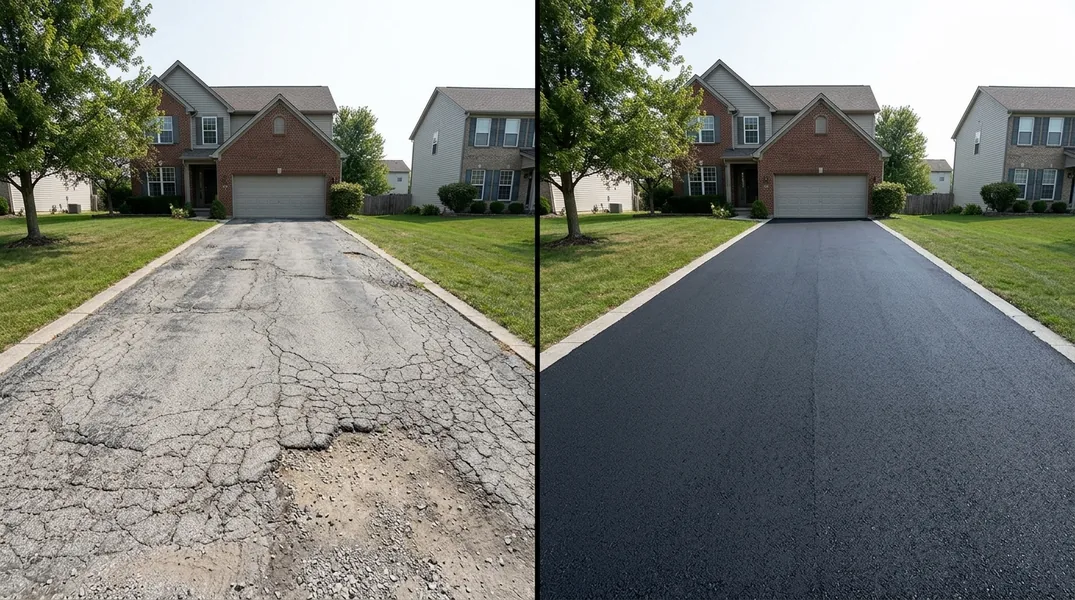
Why Driveway Edges Suffer Most During Late Winter Thaw
Late winter in Cincinnati brings a deceptive pattern: freezing nights followed by warmer days that melt snow and ice. This freeze-thaw cycle is particularly harsh on driveway edges, and understanding why helps you protect your investment.
When water seeps into small cracks and crevices along your driveway's perimeter, it expands as it freezes. This expansion puts enormous pressure on the asphalt, forcing it apart from the inside. The edges of your driveway are most vulnerable because they receive less structural support from the surrounding soil and are more exposed to moisture infiltration. Over several freeze-thaw cycles, these micro-fractures grow into larger breaks, spalling, and eventually crumbling edges that compromise your entire driveway's integrity.
The problem worsens because water naturally flows toward the edges of your driveway. Melting snow and rain collect along the perimeter, and if your driveway lacks proper drainage or has settled unevenly, water pools right where your asphalt is most fragile. This is why homeowners often notice edge damage appearing suddenly in spring, even if their driveway looked fine all winter.
Signs Your Driveway Edges Need Attention
As a homeowner in Cincinnati, knowing what to look for helps you catch problems early. Edge damage typically appears as crumbling asphalt, small chips that grow larger, or a visible separation between the driveway and the soil beneath it. You might also notice that water pools along the edges after rain or snow melt, which is a red flag that your driveway's structural integrity is compromised.
Don't ignore these warning signs. Small edge damage is far less expensive to address than waiting until the problem spreads inward, affecting the entire driveway surface. If you notice any of these issues, it's time to consider Driveway Repair or Asphalt Resurfacing & Overlay options before spring rains make matters worse.
Beware of Leftover Asphalt Scams and Driveway Paving Scams
When spring arrives and homeowners notice driveway damage, they become targets for a common scam that plagues the Cincinnati area and beyond. The leftover asphalt scam works like this: a contractor approaches your home claiming to have extra asphalt left over from a job nearby and offering to seal or patch your driveway at a heavily discounted rate. The pitch sounds reasonable, but the reality is problematic.
These operations typically use recycled, low-quality material that won't hold up to Ohio's weather conditions. The work is often done poorly, without proper preparation or compaction, and the contractors disappear before the substandard work becomes obvious. By summer, your driveway looks worse than before, and you've wasted money on a temporary fix that may have actually accelerated damage.
Driveway paving scams take many forms. Some contractors quote artificially low prices upfront, then claim they need additional work once they've started, dramatically inflating the final bill. Others use pressure tactics, claiming your driveway is in worse condition than it actually is to justify expensive repairs you don't need. Legitimate Asphalt Driveway Paving & Installation companies don't operate this way.
How to Choose a Paving Contractor You Can Trust
Protecting yourself starts with knowing how to choose a paving contractor. The most important step is verifying that the company is insured, and has a physical address in your area. Legitimate contractors are happy to provide proof of licensing and insurance. A company that hesitates or makes excuses is a red flag. Ask whether they're bonded as well, which protects you if they fail to complete the work or cause damage.
Check online reviews on Google, Better Business Bureau, and local home improvement sites. Pay attention to patterns in the feedback. One negative review might be an outlier, but multiple complaints about the same issue (like pressure sales tactics, incomplete work, or unexpected charges) indicate a real problem. Call the company's references directly and ask specific questions about their experience. Did the final cost match the estimate? Was the work completed on time? Would they hire this contractor again?
A trustworthy contractor will provide a detailed written estimate that breaks down materials, labor, timeline, and any warranties offered. They should be willing to explain what they're doing and why. If a contractor seems evasive about their process or won't put their quote in writing, move on to someone else.
Questions to Ask Your Paving Contractor Before Hiring
Before you sign a contract, you should ask questions to ask paving contractor that reveal their professionalism and expertise. Start with their experience level: How long have they been in business? Do they specialize in residential driveways or do they handle commercial projects too? Ask about their specific experience with edge repair and late-winter damage, since that's your immediate concern.
Inquire about their process. What preparation work do they do before laying new asphalt? How do they ensure proper drainage to prevent future edge damage? What's their compaction procedure? A contractor who can explain these details clearly is demonstrating genuine knowledge. Ask about material quality as well. What grade of asphalt do they use? Is it appropriate for Ohio's climate? Do they use recycled materials, and if so, in what proportion?
Don't shy away from asking about pricing and warranties. What's included in the estimate, and what's not? Are there any potential additional costs? How long is the warranty on their work, and what does it cover? A reputable contractor will provide a warranty of at least one year on new installations and will stand behind their work. Finally, ask for everything in writing. A verbal promise means nothing if there's a dispute later.
Protecting Your Driveway Through Spring and Beyond
Once you've addressed your driveway's immediate edge damage with a trustworthy contractor, focus on long-term protection. Proper drainage is your best defense against future freeze-thaw damage. Make sure water flows away from your driveway, not toward it. If you've had Pothole Repair & Asphalt Patching or resurfacing work done, ask your contractor for recommendations on maintaining the new surface.
Regular maintenance extends your driveway's life significantly. Seal coating every two to three years protects asphalt from UV damage and water infiltration. Filling small cracks promptly prevents them from becoming major repairs. These preventive steps are far less expensive than emergency repairs or full replacement.
If you're in the Cincinnati area and need professional guidance on your driveway's condition, Cincinnati Asphalt Paving is ready to help. We offer honest assessments, competitive pricing, and quality workmanship. Call us at (513) 813-2379 or request a free estimate today. Don't let late-winter damage turn into a costly problem this spring.
Looking for a professional asphalt paving contractor in Cincinnati? Cincinnati Asphalt Paving responds fast for all your asphalt paving needs.
Get a Free Quote